Refrigerator Leaking Water? Common Causes and Solutions
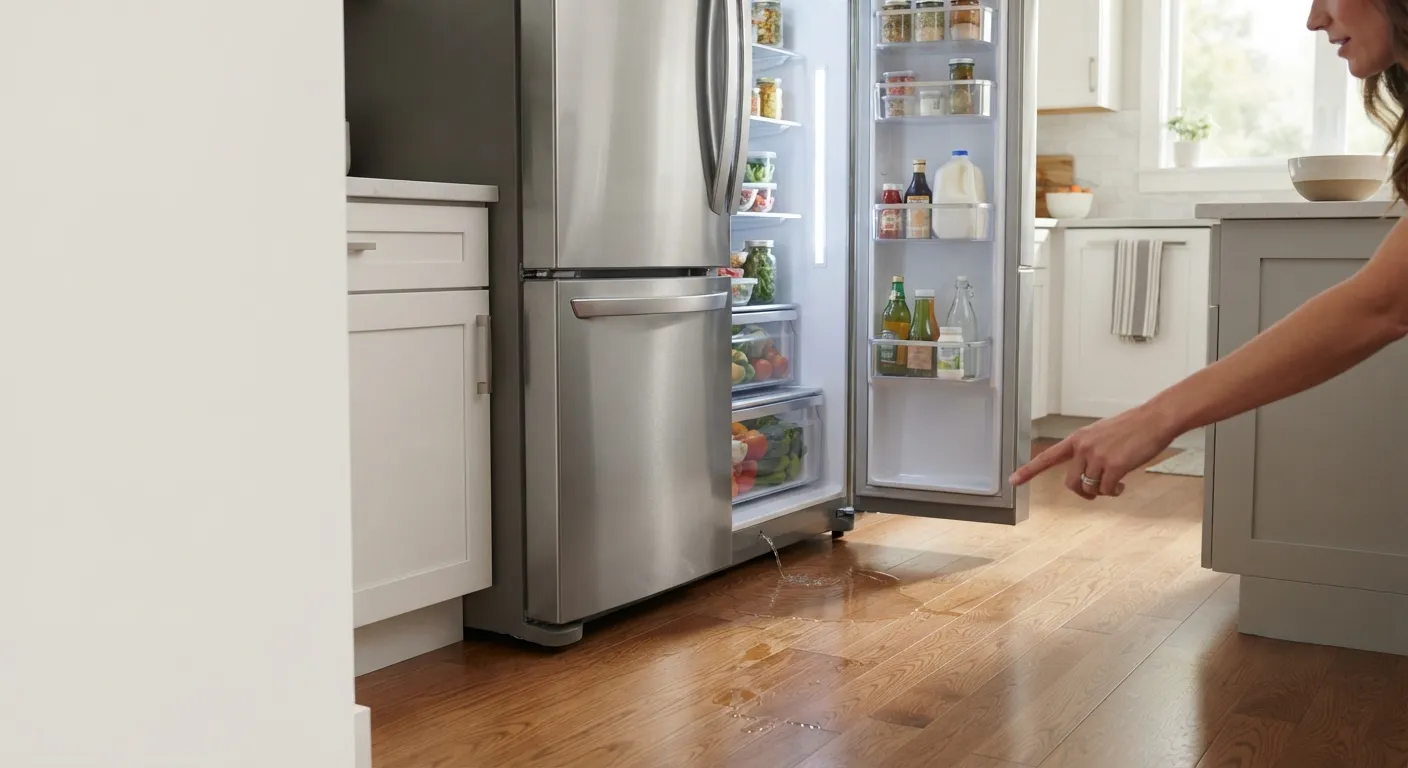
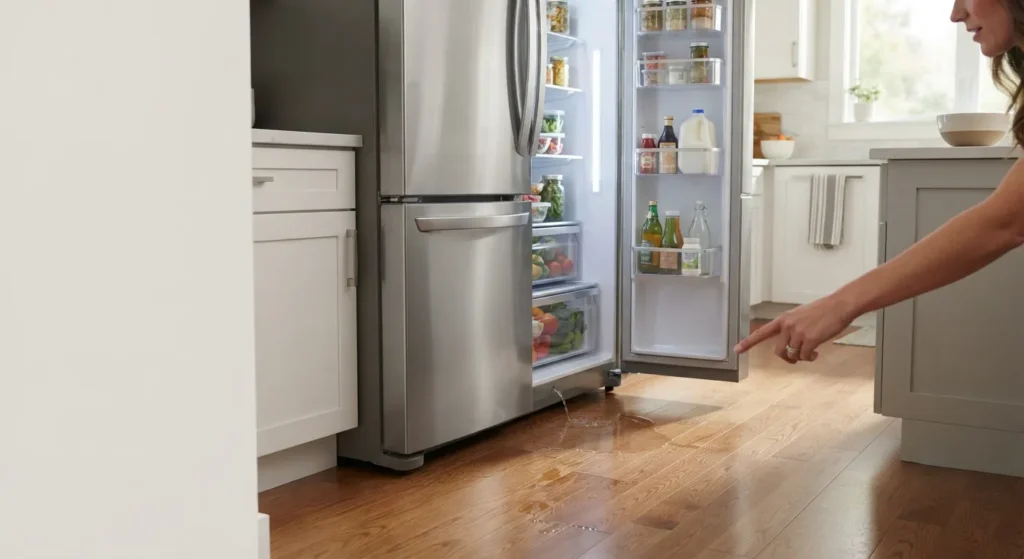
Finding a puddle of water under your refrigerator can be frustrating. While it may seem like a serious problem, many refrigerator leaks are caused by issues that can be identified quickly. Ignoring the leak, though, can lead to damaged flooring, mold growth, and more expensive repairs.
If your refrigerator leaking water, understanding the possible causes can help you determine whether it’s a simple fix or time to call a professional.
Why Is My Refrigerator Leaking Water?
Modern refrigerators rely on several components to keep food cold while managing moisture produced during normal operation. If any of these parts stop working correctly, water can collect inside the refrigerator or leak onto your floor.
Below are the most common reasons your refrigerator may be leaking.
1. Clogged Defrost Drain
The most common cause of a leaking refrigerator is a blocked defrost drain.
During the automatic defrost cycle, melted frost drains through a small hole into a drain pan beneath the appliance. If the drain becomes clogged with food particles, dirt, or ice, the water has nowhere to go and begins pooling inside the refrigerator before eventually leaking onto the floor.
2. Cracked or Damaged Drain Pan
Water from the defrost cycle collects in a drain pan underneath the refrigerator, where it normally evaporates. If the pan becomes cracked or damaged, water can escape before it evaporates.
Check For
- Visible cracks
- Warped plastic
- Overflowing water
A damaged drain pan should be replaced to prevent recurring leaks.
3. Clogged or Frozen Defrost Drain
Sometimes the drain doesn’t just clog—it freezes shut. When this happens:
- Water backs up inside the freezer.
- Ice forms around the drain opening.
- Melted water eventually leaks onto the kitchen floor.
Carefully thawing the blockage often restores normal drainage.
4. Loose or Damaged Water Supply Line
If your refrigerator has a water dispenser or ice maker, it uses a water supply line connected to your home’s plumbing. Over time, this line can:
- Develop small cracks
- Become loose at the connection
- Wear out due to age
Even a slow drip can create a noticeable puddle beneath the refrigerator. Inspect the line behind the appliance for signs of moisture.
5. Faulty Water Inlet Valve
The water inlet valve controls the flow of water to the ice maker and dispenser. A cracked valve or leaking connection may allow water to drip continuously, eventually pooling beneath the refrigerator. Because the valve operates under water pressure, replacement is usually the safest solution.
6. Refrigerator Isn’t Level
Your refrigerator should sit level or tilt slightly toward the back. If it’s leaning forward:
- Water may not flow correctly into the drain.
- Doors may not seal properly.
- Moisture can collect inside the appliance.
7. Damaged Door Gasket
The rubber gasket around the refrigerator door creates an airtight seal. If it’s torn, cracked, or dirty, warm air enters the refrigerator, creating excess condensation. Over time, that moisture can collect and leak onto the floor. Clean the gasket regularly and replace it if it’s damaged.
8. High Humidity Levels
During periods of high humidity, refrigerators naturally produce more condensation. You may notice:
- Water droplets inside the refrigerator
- Moisture around the door
- Small puddles near the appliance
If the leak only occurs during humid weather, the refrigerator may be functioning normally.
9. Ice Maker Overflow
A malfunctioning ice maker can overfill the ice mold. Excess water may:
- Freeze inside the freezer
- Overflow into nearby compartments
- Leak onto the floor after melting
If you notice unusually large ice cubes or overflowing water, the ice maker may require adjustment or repair.
10. Internal Component Failure
Less commonly, leaks can result from failed internal components, including:
- Defrost system failures
- Damaged internal tubing
- Electronic control problems
These repairs typically require specialized diagnostic equipment.
When Should You Call a Professional?
You should call a professional appliance repair if:
- Water continues leaking after cleaning the drain.
- The leak returns repeatedly.
- You notice water coming from underneath the refrigerator.
- The ice maker or water dispenser has stopped working.
- The refrigerator isn’t cooling properly.
- You suspect a faulty valve or internal component.