Dryer Runs but Clothes Stay Wet? Common Causes and Solutions
Your dryer finishes its cycle, but your clothes are still damp. If you’ve found yourself running the same load two or three times, you’re dealing with one of the most common dryer problems homeowners experience.
A situation where dryer runs but clothes stay wet can waste energy, increase utility bills, and put unnecessary wear on your clothing. Here’s what may be causing the problem and what you can do about it.
How a Dryer Dries Clothes
A clothes dryer relies on four essential components to dry laundry properly:
- Heat
- Airflow
- Tumbling action
- Proper venting
If any one of these isn’t working correctly, clothes can remain wet even though the dryer appears to operate normally.
1. A Clogged Dryer Vent
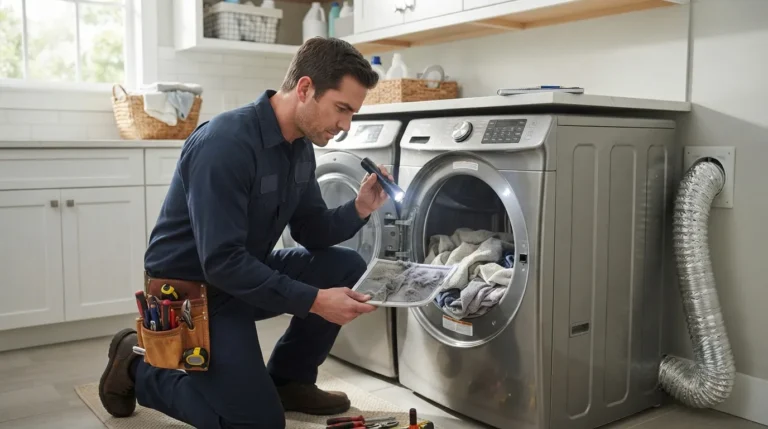
The number one reason a dryer runs but doesn’t dry clothes is a blocked exhaust vent.
As lint builds up inside the vent hose or exterior vent, hot, moist air becomes trapped inside the dryer instead of escaping outside. Common signs include:
- Clothes stay damp after one cycle
- Dryer feels unusually hot
- Laundry room becomes warm and humid
- Drying times keep getting longer
2. Lint Filter Needs Cleaning
Even if you clean the lint screen regularly, small particles can build up over time. A clogged lint filter restricts airflow, making it harder for moisture to leave the dryer.
3. Heating Element Has Failed
Electric dryers rely on a heating element to generate hot air. If the element burns out:
- The drum still spins.
- The timer still runs.
- Clothes remain wet because there’s little or no heat.
4. Faulty Thermal Fuse
A thermal fuse protects the dryer from overheating. If it blows:
- Some dryers won’t start at all.
- Others will tumble but produce no heat.
A blown thermal fuse usually indicates another problem, such as poor airflow, that should also be addressed.
5. Moisture Sensor Problems
Many modern dryers use moisture sensors to detect when clothes are dry. If these sensors become coated with residue, the dryer may end the cycle too early.
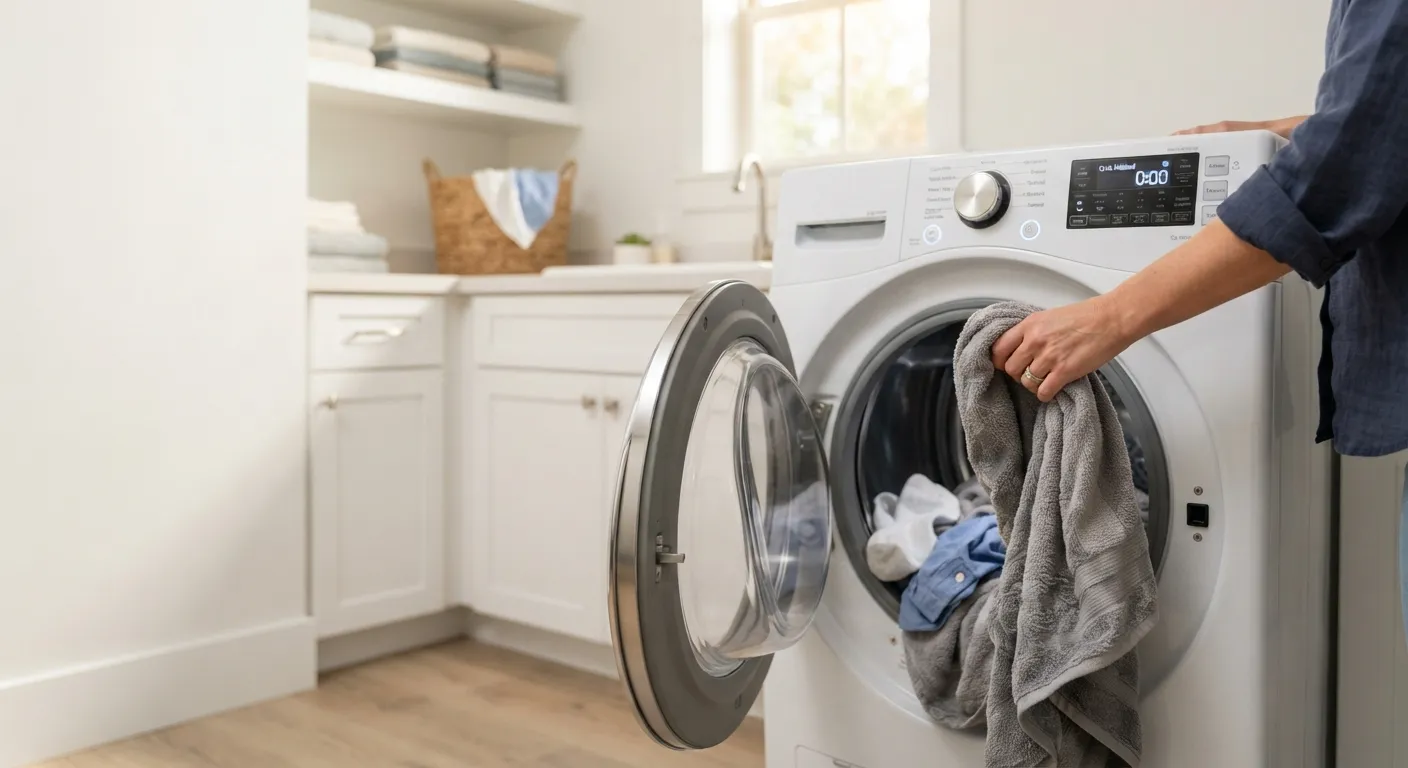
6. Overloading the Dryer
Packing too many clothes into one load prevents warm air from circulating properly. Large loads:
- Trap moisture
- Increase drying time
- Put extra strain on the dryer motor
For best results, fill the drum only about three-quarters full.
7. Incorrect Dryer Settings
Sometimes the appliance isn’t actually broken. Check whether you’ve selected:
- Air Fluff
- Delicate
- Low Heat
These settings naturally require longer drying times. For heavy towels or jeans, choose a higher heat setting designed for thicker fabrics.
8. Crushed or Kinked Vent Hose
The flexible vent hose behind the dryer can become pinched when the appliance is pushed back against the wall. Restricted airflow causes moisture to stay inside the drum. Move the dryer carefully and inspect the vent hose for sharp bends or damage.
9. Faulty Thermostat
The cycling thermostat controls the dryer’s temperature. If it malfunctions, the dryer may never reach the proper drying temperature or may shut the heat off too soon. Diagnosing thermostat problems usually requires electrical testing.
10. Blower Wheel Issues
The blower wheel pushes hot air through the dryer and out the vent. If it’s loose, damaged, or blocked by lint, airflow drops significantly. Symptoms include:
- Weak airflow
- Longer drying cycles
- Strange rattling noises
When Should You Call a Professional?
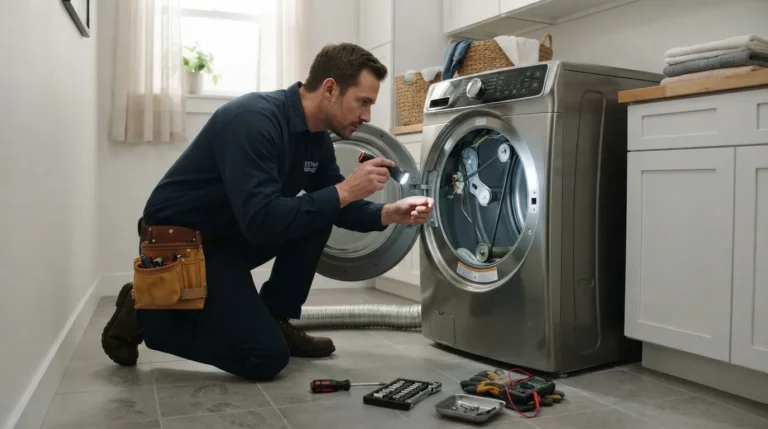
Some problems are easy to fix, while others require specialized tools and replacement parts. Consider scheduling professional dryer repair if:
- The dryer has no heat.
- The heating element has failed.
- The thermal fuse keeps blowing.
- The dryer smells like something is burning.
- Clothes remain wet after cleaning the vent and lint filter.
- You hear unusual grinding or squealing noises.
Ignoring these symptoms can lead to higher energy costs and, in some cases, create a fire hazard.